The gambling industry has spent much of the past decade discussing growth, digital expansion and new opportunities. In 2027, the conversation may be very different.
Recent developments in Brazil, India, Hungary, the Netherlands and Australia suggest that governments are reconsidering not only how gambling should be regulated, but also how much gambling they want to permit.
Meanwhile, major operators are facing growing pressure to demonstrate financial transparency, protect players, control illegal competition and justify the cost of operating in increasingly complex jurisdictions.
Тhe central question is no longer simply how large the casino industry can become. It is what kind of casino industry governments, investors and consumers will allow to exist.
Here are ten developments we anticipate will define 2027.
Operators spent substantial amounts securing licenses, building local businesses and establishing partnerships, only to face a sudden reversal of government policy.
The resulting constitutional challenges could become an important test of regulatory certainty.
Our prediction is that in 2027, international operators will pay much closer attention to the political durability of gambling licenses, not simply their cost and duration.
A government authorization may no longer be viewed as sufficient assurance that a market will remain open.
Research following India's prohibition has suggested that some former domestic gaming customers migrated toward offshore alternatives. Brazil is now testing a much broader enforcement model involving telecommunications providers, advertising platforms and financial institutions.
Our prediction is that the effectiveness of gambling bans will become a major policy debate in 2027.
Governments will increasingly be judged not by the number of websites they block, but by whether gambling participation, financial harm and illegal activity actually decline.
Casino concessions are particularly sensitive because they can determine which companies receive valuable operating rights for many years.
Our prediction is that casino concession systems, long-term exclusivity arrangements and the transparency of licensing decisions will attract greater attention in 2027.
This does not mean every country will liberalize its gambling market. Some may strengthen government control, while others could introduce more competitive tender procedures.
The bigger issue will be who gets access to gambling markets and under what conditions.
When gambling advertising is restricted, the consequences extend well beyond operators. Sports organizations and media companies may lose important commercial relationships.
Our prediction is that in 2027, casino and sportsbook sponsorship strategies will become more geographically selective.
Operators may reduce reliance on high-profile advertising in politically uncertain markets and redirect investment toward jurisdictions with clearer long-term rules.
For football clubs, broadcasters and other commercial partners, diversification away from gambling sponsorship could become a more serious consideration.
The development reflects a broader change in regulatory expectations.
Having responsible gambling policies is no longer enough. Authorities increasingly want evidence that operators are following them.
Our prediction is that in 2027, regulators will focus more heavily on measurable compliance, including intervention records, gambling-related harm indicators, operating restrictions and the effectiveness of player-protection measures.
This could increase compliance costs but also encourage more consistent standards across the industry.
The Casino Secrets data exposure involving Curaçao-related records brought renewed attention to beneficial ownership, compliance documentation and the security of information held by regulators.
At the same time, European anti-money laundering reforms are increasing expectations around financial transparency.
Our prediction is that in 2027, beneficial ownership and the source of investment capital will become more prominent in licensing decisions and regulatory investigations.
Complex corporate structures may face greater scrutiny, particularly where casinos operate across several jurisdictions or use cryptocurrency-related financial services.
Acquisitions can provide access to new markets, larger customer bases and more efficient technology platforms. However, combining businesses operating under different national regulations also creates significant compliance challenges.
Our prediction is that mergers and acquisitions will remain an important part of the gambling industry's strategy in 2027.
But investors may place greater emphasis on the quality of an operator's licenses, regulatory exposure and financial controls rather than growth alone.
A large presence in a politically unstable market could become a liability rather than an advantage.
In the United States, courts and regulators are considering the relationship between federal derivatives oversight and state gambling authority. European jurisdictions are also examining how prediction market products fit existing rules.
Our prediction is that in 2027, prediction markets will become one of the most consequential regulatory questions facing the wider gambling sector.
The outcome could influence sports betting competition, advertising rules, taxation and the treatment of products that resemble gambling but are marketed as financial instruments.
Traditional gambling operators will be watching closely.
Elsewhere, the Netherlands is moving into a new licensing period, while Canada is examining the legal possibility of connecting regulated poker players with international gaming pools.
Our prediction is that in 2027 the global gambling market will become increasingly fragmented.
Rather than one worldwide direction toward liberalization, operators will face a mixture of new opportunities, tougher licensing requirements, market restrictions and outright prohibitions.
Companies will need more selective international strategies. Entering every newly regulated jurisdiction may no longer be the most attractive approach.
That definition is becoming too narrow.
In 2027, operators will need better information about regulatory exposure, player behavior, illegal market competition, payment risks, financial sustainability and the effectiveness of responsible gambling measures.
Our prediction is that in 2027 the most valuable casino analytics will increasingly combine commercial performance with regulatory and operational intelligence.
Artificial intelligence may help process these complex datasets, but the real competitive advantage will come from asking better questions and making defensible decisions.
For casino businesses, understanding risk may become just as important as understanding revenue.
Governments are becoming more willing to intervene in gambling markets, regulators are demanding greater accountability, and operators are facing questions about the long-term security of their investments.
Some countries will welcome new operators. Others may restrict access or reconsider whether certain gambling products should be legal at all.
The companies best positioned for 2027 may not necessarily be those expanding the fastest. They may be those capable of adapting to changing regulations, demonstrating transparent ownership, protecting players and operating sustainably across different markets.
We are yet to define in 2027 if the gambling industry continues to shape its own future, or if governments increasingly decide what that future looks like.
2. DivaJackpot. (2026). Brazil betting ban heads toward Supreme Court showdown as broadcasters join legal challenge.
3. DivaJackpot. (2026). Estonia's gambling tax paradox.
4. DivaJackpot. (2026). The prediction market paradox.
5. DivaJackpot. (2026). Prediction markets are gambling.
6. CUTS International. (2026). Access to offshore betting websites after the online gaming ban: Maharashtra research report.
7. European Parliament and Council of the European Union. (2024). Directive (EU) 2024/1640 of 31 May 2024 on mechanisms for preventing the use of the financial system for money laundering or terrorist financing. EUR-Lex.
8. Government of India, Press Information Bureau. (2026). Promotion and Regulation of Online Gaming Act, 2025.
9. Liquor & Gaming NSW. (2026, October 12). Liquor & Gaming NSW targets pokies shutdown hours compliance. NSW Government.
10. Ministry of Finance, Brazil. (2026). Medida Provisória nº 1.394/2026: Entenda as novas regras para as apostas de quota fixa [Provisional Measure No. 1,394/2026: Understanding the new rules for fixed-odds betting].
11. Ministry of Justice and Public Security, Brazil. (2026, September 25). Governo Federal proíbe bets em todo o País e lança pacote de proteção às famílias endividadas [Federal government bans betting nationwide and launches a protection package for indebted families].
12. National Police Board of Finland. (n.d.). Gambling. Finnish Police.
13. Primus Partners, & Institute for Competitiveness. (2026). Trends in India's online gaming landscape post-PROGA 2025: Evidence of rising offshore participation.
14. Reuters. (2026, September 25). Brazil's Lula bans online betting, unveils debt relief plan as reelection race tightens.
15. Supreme Court of Canada. (2026). Atlantic Lottery Corporation et al. v. Attorney General of Ontario (Case No. 42141).
Recent developments in Brazil, India, Hungary, the Netherlands and Australia suggest that governments are reconsidering not only how gambling should be regulated, but also how much gambling they want to permit.
Meanwhile, major operators are facing growing pressure to demonstrate financial transparency, protect players, control illegal competition and justify the cost of operating in increasingly complex jurisdictions.
Тhe central question is no longer simply how large the casino industry can become. It is what kind of casino industry governments, investors and consumers will allow to exist.
Here are ten developments we anticipate will define 2027.
1. Governments Will Reconsider Whether Gambling Legalization Is Reversible
Brazil's extraordinary decision to prohibit its recently regulated online betting market has introduced a new category of risk for international gambling companies.Operators spent substantial amounts securing licenses, building local businesses and establishing partnerships, only to face a sudden reversal of government policy.
The resulting constitutional challenges could become an important test of regulatory certainty.
Our prediction is that in 2027, international operators will pay much closer attention to the political durability of gambling licenses, not simply their cost and duration.
A government authorization may no longer be viewed as sufficient assurance that a market will remain open.
2. Illegal Gambling Will Become a Bigger Political Issue Than Legal Gambling
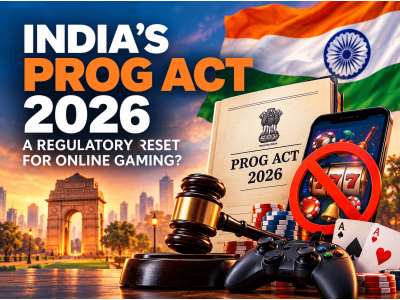
India's restrictions on online money gaming and Brazil's extensive website-blocking campaign raise an uncomfortable question, whether governments could possibly eliminate gambling demand by removing legal supply?Research following India's prohibition has suggested that some former domestic gaming customers migrated toward offshore alternatives. Brazil is now testing a much broader enforcement model involving telecommunications providers, advertising platforms and financial institutions.
Our prediction is that the effectiveness of gambling bans will become a major policy debate in 2027.
Governments will increasingly be judged not by the number of websites they block, but by whether gambling participation, financial harm and illegal activity actually decline.
3. Casino Concessions Will Face Greater Political and Commercial Scrutiny
Hungary's decision to remove the gambling regulator's prior approval requirement from important concession procedures illustrates how governments can reconsider control over casino market access.Casino concessions are particularly sensitive because they can determine which companies receive valuable operating rights for many years.
Our prediction is that casino concession systems, long-term exclusivity arrangements and the transparency of licensing decisions will attract greater attention in 2027.
This does not mean every country will liberalize its gambling market. Some may strengthen government control, while others could introduce more competitive tender procedures.
The bigger issue will be who gets access to gambling markets and under what conditions.
4. The Economics of Casino Sponsorship Will Change
Brazil's betting prohibition has demonstrated how closely gambling businesses have become connected to professional sports, broadcasters, advertising agencies and digital media.When gambling advertising is restricted, the consequences extend well beyond operators. Sports organizations and media companies may lose important commercial relationships.
Our prediction is that in 2027, casino and sportsbook sponsorship strategies will become more geographically selective.
Operators may reduce reliance on high-profile advertising in politically uncertain markets and redirect investment toward jurisdictions with clearer long-term rules.
For football clubs, broadcasters and other commercial partners, diversification away from gambling sponsorship could become a more serious consideration.
5. Player Protection Will Move From Policy Documents to Measurable Enforcement
Australia's New South Wales regulator has intensified enforcement of mandatory gaming machine shutdown hours, including reviewing venue records and using data analysis to identify possible violations.The development reflects a broader change in regulatory expectations.
Having responsible gambling policies is no longer enough. Authorities increasingly want evidence that operators are following them.
Our prediction is that in 2027, regulators will focus more heavily on measurable compliance, including intervention records, gambling-related harm indicators, operating restrictions and the effectiveness of player-protection measures.
This could increase compliance costs but also encourage more consistent standards across the industry.
6. Casino Operators Will Face More Questions About Who Really Owns Them
Ownership transparency has become an increasingly important issue in gambling regulation.The Casino Secrets data exposure involving Curaçao-related records brought renewed attention to beneficial ownership, compliance documentation and the security of information held by regulators.
At the same time, European anti-money laundering reforms are increasing expectations around financial transparency.
Our prediction is that in 2027, beneficial ownership and the source of investment capital will become more prominent in licensing decisions and regulatory investigations.
Complex corporate structures may face greater scrutiny, particularly where casinos operate across several jurisdictions or use cryptocurrency-related financial services.
7. Gambling Industry Consolidation Will Continue, but Bigger Will Not Always Mean Safer
Major gambling groups are pursuing scale as regulatory, technology and operational costs increase.Acquisitions can provide access to new markets, larger customer bases and more efficient technology platforms. However, combining businesses operating under different national regulations also creates significant compliance challenges.
Our prediction is that mergers and acquisitions will remain an important part of the gambling industry's strategy in 2027.
But investors may place greater emphasis on the quality of an operator's licenses, regulatory exposure and financial controls rather than growth alone.
A large presence in a politically unstable market could become a liability rather than an advantage.
8. Prediction Markets Will Challenge the Traditional Definition of Gambling
The legal disputes involving Kalshi and Polymarket have exposed a fundamental disagreement over whether certain event contracts belong under financial regulation or gambling law.In the United States, courts and regulators are considering the relationship between federal derivatives oversight and state gambling authority. European jurisdictions are also examining how prediction market products fit existing rules.
Our prediction is that in 2027, prediction markets will become one of the most consequential regulatory questions facing the wider gambling sector.
The outcome could influence sports betting competition, advertising rules, taxation and the treatment of products that resemble gambling but are marketed as financial instruments.
Traditional gambling operators will be watching closely.
9. The Casino Industry Will Split Between Expanding and Restricting Markets
Finland's planned opening of its competitive gambling market in July 2027 contrasts sharply with Brazil's decision to prohibit major forms of online gambling.Elsewhere, the Netherlands is moving into a new licensing period, while Canada is examining the legal possibility of connecting regulated poker players with international gaming pools.
Our prediction is that in 2027 the global gambling market will become increasingly fragmented.
Rather than one worldwide direction toward liberalization, operators will face a mixture of new opportunities, tougher licensing requirements, market restrictions and outright prohibitions.
Companies will need more selective international strategies. Entering every newly regulated jurisdiction may no longer be the most attractive approach.
10. Casino Analytics Will Become Essential to Business Survival
For years, gambling analytics has been associated primarily with player acquisition, marketing performance and customer retention.That definition is becoming too narrow.
In 2027, operators will need better information about regulatory exposure, player behavior, illegal market competition, payment risks, financial sustainability and the effectiveness of responsible gambling measures.
Our prediction is that in 2027 the most valuable casino analytics will increasingly combine commercial performance with regulatory and operational intelligence.
Artificial intelligence may help process these complex datasets, but the real competitive advantage will come from asking better questions and making defensible decisions.
For casino businesses, understanding risk may become just as important as understanding revenue.
In Conclusion, 2027 Could Be the Year Gambling Growth Meets Political Reality
The casino industry's future will not be determined by technology alone.Governments are becoming more willing to intervene in gambling markets, regulators are demanding greater accountability, and operators are facing questions about the long-term security of their investments.
Some countries will welcome new operators. Others may restrict access or reconsider whether certain gambling products should be legal at all.
The companies best positioned for 2027 may not necessarily be those expanding the fastest. They may be those capable of adapting to changing regulations, demonstrating transparent ownership, protecting players and operating sustainably across different markets.
We are yet to define in 2027 if the gambling industry continues to shape its own future, or if governments increasingly decide what that future looks like.
References:
1. Angelova, M. (2026, September 29). Casino industry trends 2027: 10 changes to watch. DivaJackpot.2. DivaJackpot. (2026). Brazil betting ban heads toward Supreme Court showdown as broadcasters join legal challenge.
3. DivaJackpot. (2026). Estonia's gambling tax paradox.
4. DivaJackpot. (2026). The prediction market paradox.
5. DivaJackpot. (2026). Prediction markets are gambling.
6. CUTS International. (2026). Access to offshore betting websites after the online gaming ban: Maharashtra research report.
7. European Parliament and Council of the European Union. (2024). Directive (EU) 2024/1640 of 31 May 2024 on mechanisms for preventing the use of the financial system for money laundering or terrorist financing. EUR-Lex.
8. Government of India, Press Information Bureau. (2026). Promotion and Regulation of Online Gaming Act, 2025.
9. Liquor & Gaming NSW. (2026, October 12). Liquor & Gaming NSW targets pokies shutdown hours compliance. NSW Government.
10. Ministry of Finance, Brazil. (2026). Medida Provisória nº 1.394/2026: Entenda as novas regras para as apostas de quota fixa [Provisional Measure No. 1,394/2026: Understanding the new rules for fixed-odds betting].
11. Ministry of Justice and Public Security, Brazil. (2026, September 25). Governo Federal proíbe bets em todo o País e lança pacote de proteção às famílias endividadas [Federal government bans betting nationwide and launches a protection package for indebted families].
12. National Police Board of Finland. (n.d.). Gambling. Finnish Police.
13. Primus Partners, & Institute for Competitiveness. (2026). Trends in India's online gaming landscape post-PROGA 2025: Evidence of rising offshore participation.
14. Reuters. (2026, September 25). Brazil's Lula bans online betting, unveils debt relief plan as reelection race tightens.
15. Supreme Court of Canada. (2026). Atlantic Lottery Corporation et al. v. Attorney General of Ontario (Case No. 42141).
Добави файлове
Our Featured Casino Partners
Добави файлове

100% up to €2000 + 300 Free Spins + 50 Exclusive
Welcome bonus

Game providers


 ...
Play now
18+|New customers|T&C Apply


 ...

100% up to 500 EUR + 200FS + 1 Bonus Crab
Welcome bonus

Game providers


 ...
Play now
18+|New customers|T&C Apply
Also in Diva Jackpot News
Добави файлове
12 October,
2026
Australia Considers Shorter Gambling Hours
New South Wales is strengthening enforcement of mandatory slot machine shut...

08 October,
2026
Erica Anderson on Leadership, Growth and Why Women Belong at the Table in iGaming
Income Access VP Erica Anderson discusses leadership, mentorship, adaptabil...