
Bulgaria's government has proposed removing the country's dedicated gambling affiliate licensing regime as part of a much wider overhaul of the Gambling Act. If the draft legislation is adopted in its current form, existing licenses for gambling-promotion activity would terminate on January 1, 2027.
This proposal stands out because Bulgaria only introduced the affiliate licensing system on August 1, 2026.Under the current framework, affiliates receiving performance-based commissions for promoting licensed gambling operators are treated as separately regulated participants in the Bulgarian gambling market. They require their own licenses and are subject to a two-component state fee: €6,000 annually plus 10% of performance-linked commission remuneration.
Now, less than two months after the system started, the government wants to remove the affiliate category, special licensing rules, the Article 30a fee, and the related sanctions.
The Association of the Gaming Industry in Bulgaria (AGIB), reporting on the draft published for public consultation, says licenses already issued for gambling-promotion activities would terminate on January 1, 2027 if the proposal is adopted without substantial changes.
This is more than just another change to Bulgaria's advertising rules. It could mean reversing an entire regulatory model almost as soon as it was put in place.
Bulgaria Only Introduced Affiliate Licensing in August
The quick pace of this proposed change makes the situation unusual.Amendments published in Bulgaria's State Gazette on July 31 introduced an explicit regulatory category for gambling affiliate operators from August 1, 2026. Existing affiliates with agreements in place at the start of August had until August 15 to apply for licenses.
The law defines an affiliate operator as a person or company, separate from the gambling operator itself, that promotes gambling in return for remuneration linked to measurable performance.
That can include metrics such as the number of players acquired, deposits, wagers or other measurable results.
Importantly, the legislation distinguishes this activity from ordinary advertising, media or technical services where remuneration is not tied to those performance outcomes.
This move brought the traditional CPA and revenue-based gambling affiliate model directly into Bulgaria's licensing system.
The government aimed for something more specific than regulating gambling ads.
Affiliate businesses themselves became identifiable regulated entities.
What Does a Bulgarian Gambling AAffiliate businesses became clearly regulated entities.fee.
Licensed affiliates are subject to an annual €6,000 fixed fee, combined with a variable charge equal to 10% of performance-based commission remuneration.The legislation also gave the National Revenue Agency oversight of affiliate activity and required applicants to disclose the channels through which they would promote gambling, including websites, mobile applications, social media profiles, video platforms, and streaming services.
Affiliates may promote only gambling organizers with valid Bulgarian licenses.
The regime was accompanied by sanctions for unauthorized or non-compliant affiliate activity, creating what was effectively a new regulated layer between licensed gambling operators and the players they acquire.
When the measure was introduced, the government's stated revenue measures included both affiliate licensing and a two-component fee linked to affiliate performance. Parliamentary records from the debate over the 2026 budget legislation specifically identify affiliate licensing as part of the government's gambling-sector measures.
But this experiment may be short-lived.
What Is Bulgaria Proposing for 2027?
The government's new draft takes a very different approach.According to AGIB's analysis of the proposed amendments, the affiliate regime introduced in August would be abolished along with its special requirements, Article 30a fees and related sanctions.
Existing licenses for gambling-promotion activities would terminate on January 1, 2027 if the legislation is approved in its current form.
At the same time, Bulgaria is proposing a substantially broader restriction on gambling advertising.
The proposed version of Article 10 would cover advertising not only for gambling games themselves but also their organizers, associated trademarks and distinctive signs, regardless of the form, method or location in which the promotion appears.
Specific exceptions would remain, including information necessary for participation provided through operators' own websites and licensed premises, certain sports sponsorship arrangements, and limited branding at gambling locations.
This marks an important difference.
Bulgaria is not necessarily moving from regulated affiliates to unrestricted affiliates.
It appears toIt looks like the government is shifting from affiliate licensing to much broader control over gambling promotion.ction could determine whether the removal of licensing actually benefits affiliate businesses.
Removing the License Does Not Necessarily Mean More Freedom
At first, getting rid of the €6,000 yearly licensing fee and the 10% performance charge might seem like good news for gambling affiliates.Commercially, however, the situation is more complicated.
However, the business reality is more complicated. ition within a regulated gambling market. It creates costs and compliance obligations, but it also establishes a formal route for compliant publishers to operate.
A broad advertising prohibition can create a very different situation. It could become extremely restricted; removing the affiliate license itself may have limited commercial value.
The real question for affiliates is therefore not simply:
"Will we still need a license?"
It is:
"What gambling content and commercial promotion will actually remain legal?"
That will likely be the bigger question if Bulgaria moves forward with these proposals.
From Licensing Affiliates to Regulating Acquisition
Bulgaria’s approach highlights a bigger regulatory challenge for the European gambling industry.Traditional affiliate marketing does not fit neatly into older advertising frameworks.
An affiliate can simultaneously operate as a publisher, comparison service, SEO business, advertising partner and customer-acquisition channel. Compensation models can include fixed placements, cost-per-acquisition agreements, revenue sharing or combinations of several structures.
Bulgaria's August legislation attempted to draw a relatively clear regulatory boundary.
If compensation was connected to measurable gambling performance, the publisher could fall within the statutory definition of an affiliate operator.
The latest proposal could shift attention away from the intermediary's legal status and toward the underlying promotional activity.
This difference is important.
One approach effectively says:
You may acquire gambling customers, but you must be licensed and regulated.
The other asks a more fundamental question:
Where, how and to what extent should gambling be promoted at all?
Why Bulgaria Matters Beyond Bulgaria
Bulgaria's policy reversal deserves attention outside its domestic market because European regulators are increasingly examining how licensed operators acquire customers through third parties.Affiliate marketing sits directly at the intersection of several regulatory concerns: advertising compliance, responsible gambling, consumer protection, operator accountability and the visibility of unlicensed gambling websites.
No single European affiliate-regulation model exists.
Some jurisdictions place considerable responsibility on licensed operators for their marketing partners' conduct. Others rely primarily on advertising rules, contractual oversight and general consumer-protection requirements. Bulgaria briefly went further by establishing affiliates themselves as a distinct licensed category.
This proposed reversal is especially important for the European industry to follow.
If the affiliate regime ends on January 1, it would be a rare case of a country introducing direct affiliate licensing and then dropping it within months.
The Bigger 2027 Question: License or Ban?
The development raises a larger question for the European iGaming market heading into 2027.Will regulators increasingly bring gambling affiliates directly inside licensing systems, or will tighter advertising restrictions make parts of the traditional affiliate-acquisition model commercially difficult regardless of licensing?
Bulgaria has tried both approaches in the same year.
In August, it chose licensing.
By September, the government suggested a much broader advertising framework and removed the new affiliate category at the same time. That creates uncertainty around future customer-acquisition strategies. For affiliates, it raises questions about investment in Bulgarian-language SEO, comparison content, paid acquisition and performance-based commercial agreements.
This could also affect smaller publishers. This creates financial and administrative barriers to entry, particularly when it combines a fixed annual fee with a percentage of commission income. A sweeping restriction on promotional activity, however, could present an even greater obstacle if compliant commercial content has very few permitted distribution channels.
What Happens Next?
So far, nothing has been abolished. The Bulgarian government announced amendments to the Gambling Act on September 23, 202,6 and placedthem into the public-consultation process. AGIB published its detailed analysis the following day. The main provisions are proposed to take effect on January 1, 2027.The legislation can still change during consultation and the subsequent legislative process.
Until amendments are enacted and enter into force, Bulgaria's current affiliate licensing requirements remain the relevant legal framework. The existing law introduced the regime from August 1 and established the €6,000 annual fee and 10% variable component.
However, for the European gambling industry, the importance of this proposal is already clear. The summer is turning performance-based affiliates into licensed gambling-market participants. It could begin 2027, eliminating that category altogether and replacing the underlying philosophy with considerably tighter controls over gambling promotion.
This means Bulgaria’s situation is more than just a local regulatory story.
It is becoming a real-time experiment in one of the toughest questions in European iGaming regulation: should affiliate acquisition be licensed, restricted, or possibly pushed out by stricter advertising rules
Добави файлове
Our Featured Casino Partners
Добави файлове


 ...

180% + 40% RakeBack +no deposit 5 BCD
Welcome bonus

Game providers


 ...
Play now
18+|New customers|T&C Apply


 ...
Also in Diva Jackpot News
Добави файлове
27 September,
2026
Curaçao Leak Puts Gambling's Beneficial-Ownership System Under the Microscope
Casino Secrets Leak Exposes Curaçao Casino Ownership Files
27 September,
2026
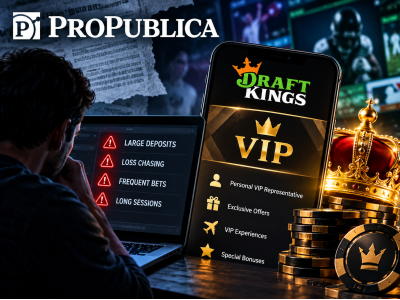
ProPublica Stress-Tests DraftKings’ Responsible-Gambling Controls and Still Gets Made a VIP
A ProPublica investigation stress-tested DraftKings’ responsible-gambling s...
26 September,
2026
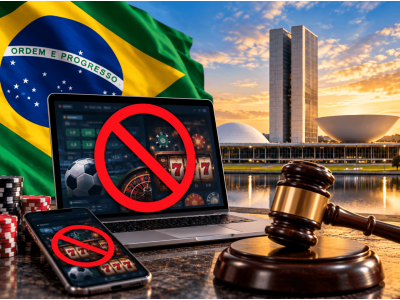
Brazil Bans Online Betting and Casino Games in Historic Regulatory Reversal
Brazil has abruptly banned regulated online sports betting and casino games...
